






Breaking the Feedback Barrier in SaaS Development
In the dynamic world of SaaS development, capturing user feedback is more critical than ever. As solo founders and indie developers strive to refine their products, the ability to gather genuine insights can make or break early-stage success. Yet, traditional feedback mechanisms—often reliant on lengthy text forms—create friction, leading to abandoned responses and watered-down insights. This gap in feedback collection is not just a minor inconvenience; it represents a significant barrier to understanding user needs in real-time, especially for those in the nascent stages of product development.
The Challenge of Effective Feedback Collection
For many SaaS developers, the initial phase of user acquisition is pivotal. Yet, the process of gathering insightful feedback remains fraught with challenges. Current tools largely depend on typed responses, which inadvertently filter out the spontaneous and nuanced feedback that can be pivotal for development. Users, faced with the tedium of typing, often provide minimal or no feedback at all. This lack of robust data leaves developers guessing about user experiences and potential improvements. The need for a more intuitive and less intrusive feedback mechanism is clear—one that captures the raw, unfiltered thoughts of users precisely when they encounter issues.
Innovative Approaches to Feedback: Enter Gripe
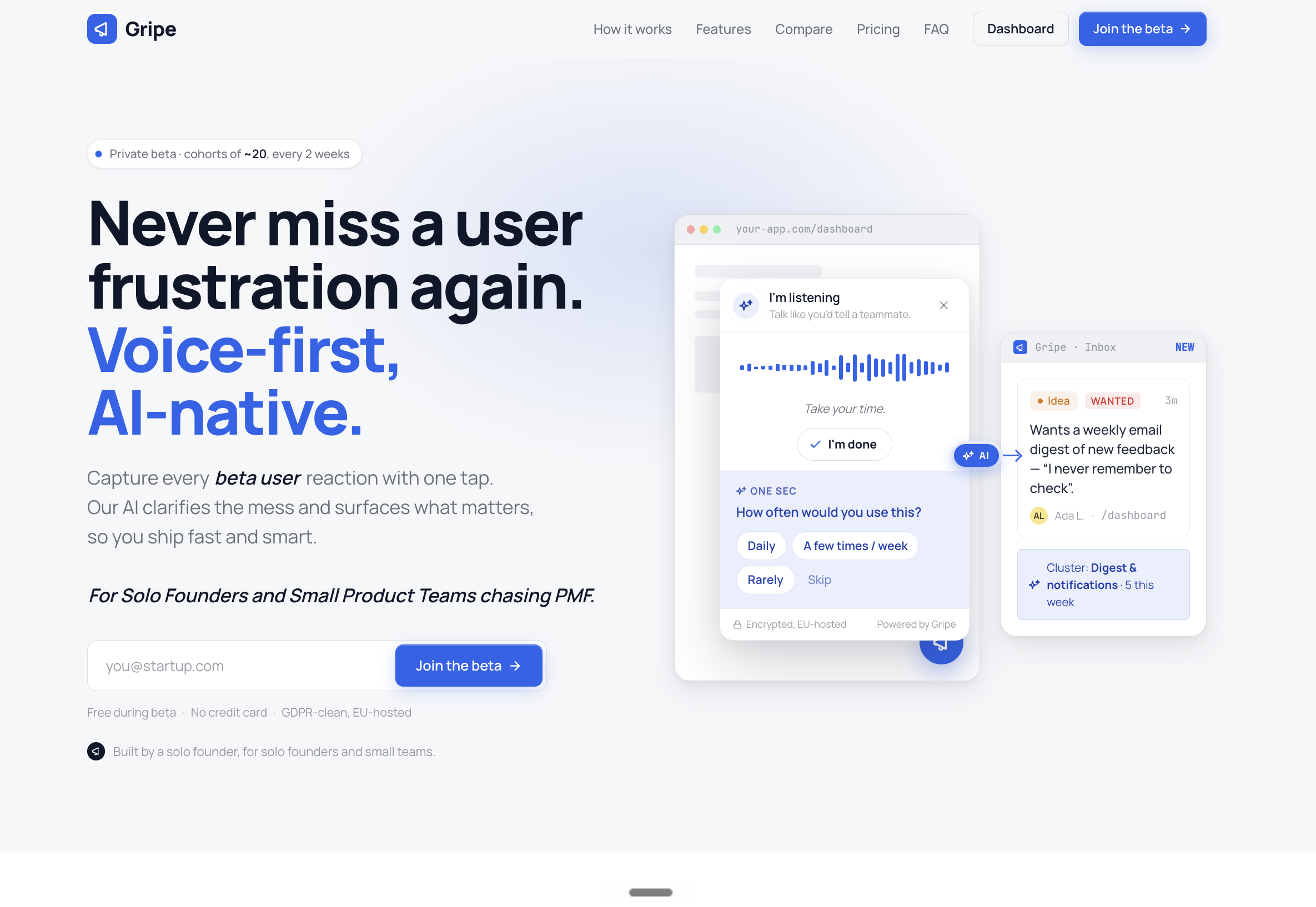
Responding to this critical need, new tools are emerging that prioritize user ease and data richness. Gripe stands out as a pioneering solution, designed specifically for solo SaaS founders. This voice-first feedback widget enables users to vocalize their thoughts directly within the product interface, reducing friction and increasing the fidelity of the feedback received. By allowing users to speak rather than type, Gripe helps founders capture honest and immediate reactions, crucial for iterative development.
Gripe in Action: Simplifying Feedback Collection
Implementing Gripe is straightforward: a lightweight script is added to the website, introducing a megaphone button for feedback. Once clicked, users can choose to speak or type their feedback, supported by an automatic screenshot that provides context. This entire process occurs within a Shadow DOM, ensuring it doesn’t interfere with the site’s design or functionality. After the feedback is submitted, Gripe’s AI processes the input—transcribing voice, categorizing issues, and even asking follow-up questions if needed. This results in actionable insights rather than vague complaints.
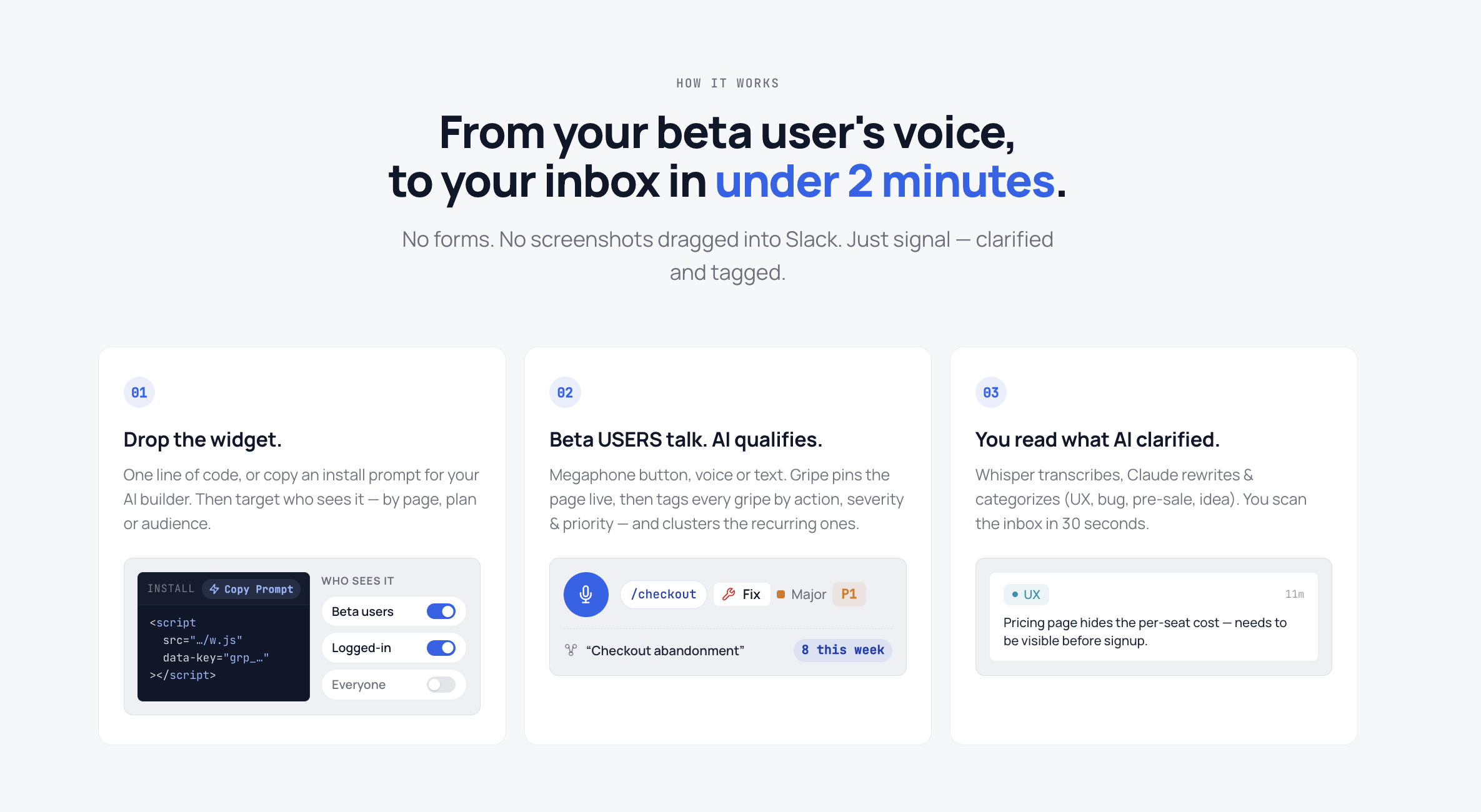
The feedback is then organized in a clean dashboard, offering both detailed and aggregated insights. Developers can see patterns across feedback types—UX issues, bug reports, or feature ideas—allowing for strategic prioritization. This streamlined process not only saves time but enhances the quality of feedback analysis.
What Differentiates Gripe?
Gripe’s innovation lies in its simplicity and targeted functionality. Unlike comprehensive support suites like Intercom or Zendesk, Gripe is a focused tool for early-stage feedback, not a full customer support solution. This specialization is reflected in its pricing model, which caters to the budget-conscious indie developer. Moreover, Gripe’s emphasis on privacy—requiring explicit consent and minimizing data logging—aligns with current concerns about data protection, adding another layer of appeal.
Who Should Consider Gripe?
Gripe is particularly suited for solo SaaS founders and indie developers launching alpha or beta products. Those utilizing AI app builders such as Replit, Bolt, Lovable, and v0 will find its streamlined feedback process invaluable. If your goal is to capture unfiltered user insights to drive product improvement before scaling, Gripe offers a compelling solution.
About the Builder: Paul Blaiset
Gripe is the brainchild of Paul Blaiset, a solo founder with firsthand experience in the challenges of early-stage product development. His motivation stems from the desire to bridge the communication gap between developers and users, ensuring that valuable insights are not lost in translation. By focusing on the specific needs of solo founders, Paul has created a tool that directly addresses the core issues faced during the critical early phases of product development.
The Future of Feedback in SaaS Development
As the SaaS landscape continues to evolve, tools like Gripe highlight a shift towards more user-centric feedback mechanisms. By reducing friction and increasing the quality of insights, these innovations empower developers to create more responsive and user-friendly products. Looking ahead, the integration of AI in feedback processing promises even greater efficiencies and accuracies, raising the bar for what developers can achieve with user insights.
Explore the Gripe Launch
Gripe has officially launched on Sidehunt, bringing a new level of ease to user feedback collection. To explore Gripe further, visit their website or check out their Sidehunt project page. Founders working on similar innovations can also submit their projects on Sidehunt to gain visibility and feedback.
Quick Answers
How does Gripe improve feedback collection for SaaS developers?
Gripe improves feedback collection by allowing users to provide voice feedback directly within the product interface, reducing the friction associated with typing. This approach captures more genuine and immediate user insights, which are then processed by AI to provide actionable feedback.
Who is the target audience for Gripe?
Gripe is targeted at indie hackers and solo SaaS founders, particularly those in the alpha and beta stages of product development. It's designed for those who need a lightweight, focused tool to gather early-stage feedback efficiently.
What privacy measures does Gripe implement?
Gripe prioritizes privacy by requiring explicit user consent before capturing any feedback. It minimizes data logging and ensures that no personal data is recorded in logs. Each company's data is kept isolated, and the widget is fortified against spam through measures like rate limiting and bot honeypots.
