







The Evolving Landscape of Document Management
In the digital age, the way businesses handle documents is undergoing a transformation. Document management systems (DMS) are no longer just about storing files; they're about integrating workflows, enhancing productivity, and providing seamless access to critical information. This shift is driven by the need for efficiency and accuracy in managing data, particularly in environments where documentation is abundant and time is of the essence. As organizations seek to streamline operations, the role of a sophisticated DMS becomes increasingly vital. This is where solutions like DoxBox come into play, offering a glimpse into the future of document management.
The Document Management Challenge
For many teams, the traditional approach to handling documents involves a mix of manual filing, physical storage, and basic digital organization. These methods often lead to inefficiencies, such as the constant chase for misplaced invoices or the time-consuming task of sorting through endless folders. Such practices not only waste time but also increase the likelihood of errors and miscommunication. The challenge is particularly pronounced in industries that require meticulous documentation, such as finance and legal sectors. Here, the gap between current practices and optimal efficiency is where innovative solutions are most needed.
Innovative Responses to Document Management Needs
As the demand for more effective document management grows, developers are crafting solutions that integrate advanced features like optical character recognition (OCR) and workflow automation. DoxBox is one such solution, designed to address these needs with a comprehensive suite of tools. It caters to both small teams and large organizations, providing a platform that not only organizes and secures documents but also automates workflows. With its focus on clarity and structure, DoxBox stands out as a practical example of how technology can simplify complex document management processes.
Implementing DoxBox: Practical Use Cases
For individuals and small teams, DoxBox offers an intuitive interface that reduces the learning curve, allowing users to focus on their core tasks. It automates the scanning and organization of invoices, minimizing the effort needed to maintain accurate records. Larger teams benefit from its ability to sync with existing ERP systems, ensuring that all data is up-to-date and accessible. By leveraging its features, teams can improve decision-making processes and reduce the time spent on administrative tasks.
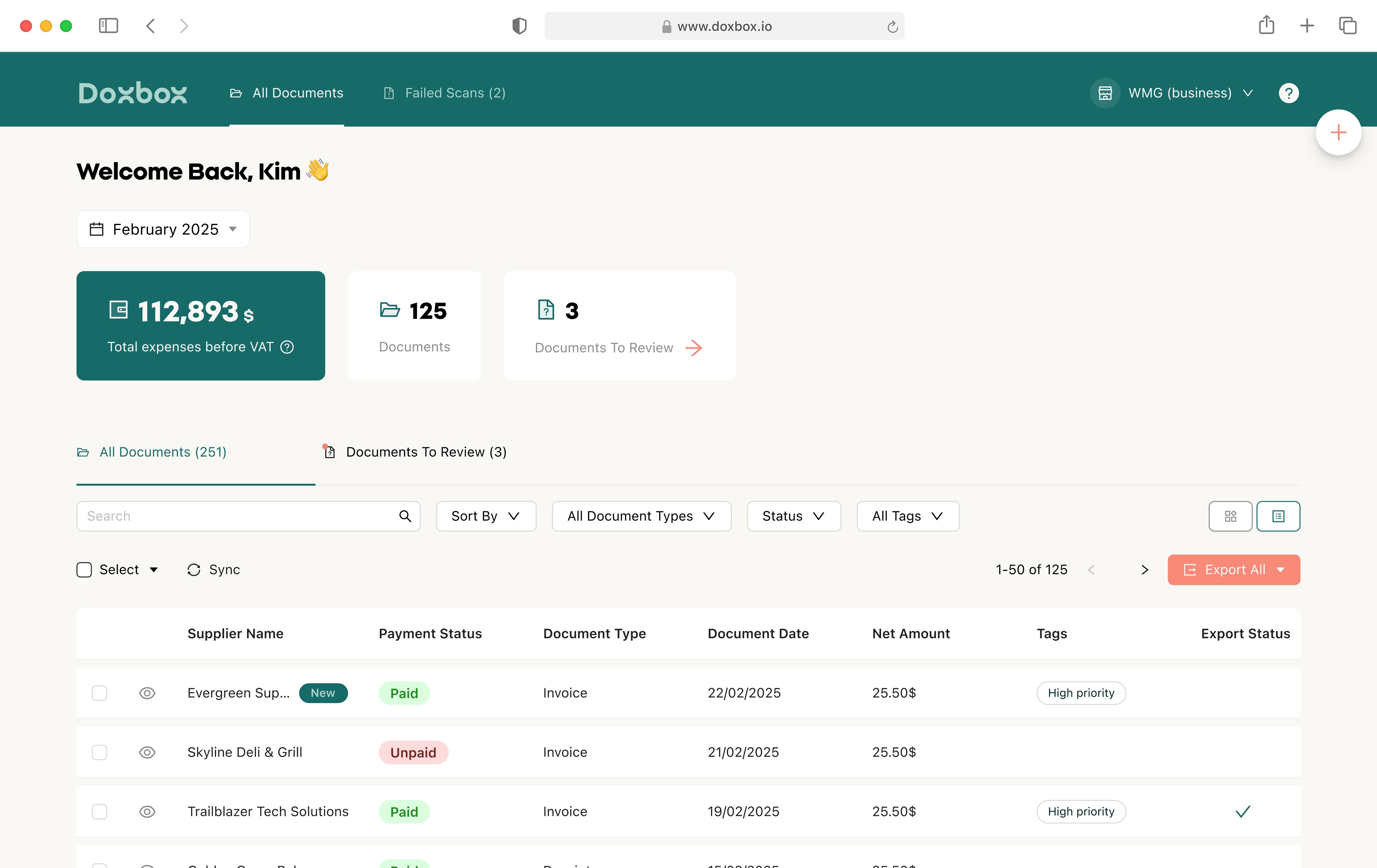
DoxBox's use of OCR technology allows for quick retrieval of documents, eliminating the need for manual searches. This technology ensures that users can find the information they need with minimal effort, enhancing overall productivity.
What Sets DoxBox Apart?
One of the standout features of DoxBox is its pricing model—it's free, making it accessible to a wide range of users without the barrier of cost. This accessibility, combined with its robust feature set, positions it well within the productivity and document management space. The platform's ability to cater to varying team sizes and its ease of integration with existing systems are significant differentiators. It provides a practical solution without overwhelming users with complexity, which is crucial for adoption in diverse organizational settings.
Who Will Benefit from DoxBox?
DoxBox is particularly beneficial for small to medium-sized businesses, freelancers, and teams that handle a high volume of documentation. Industries such as finance, legal, and accounting, where document accuracy and accessibility are paramount, will find DoxBox especially useful. By reducing the time spent on document management, these users can redirect their focus toward strategic activities that drive business growth.
About the Builder: doxbox123
The mind behind DoxBox, known as doxbox123, brings a keen understanding of document management challenges. Their motivation to develop DoxBox stems from a desire to simplify and streamline the often cumbersome processes associated with documentation. This focus on user-friendly design and efficiency reflects a deep commitment to improving how professionals manage their workflows.
Looking to the Future of Document Management
As digital transformation continues to influence business processes, the role of document management systems like DoxBox will only grow in importance. The integration of machine learning and AI could further enhance these systems, offering predictive insights and even greater automation capabilities. The ongoing evolution in this space invites us to consider how we can leverage technology to not just manage documents, but to gain strategic insights from them.
Explore the Launch
To learn more about how DoxBox can transform your document management processes, visit DoxBox's website. This project recently launched on Sidehunt, a platform for discovering innovative startups. Founders looking to showcase their projects can submit to Sidehunt and join a community of forward-thinking entrepreneurs.
Quick Answers
What is DoxBox?
DoxBox is a document management system software that helps users collect, scan, organize, and secure invoices and files. It includes features like workflow automation, OCR, and ERP synchronization to streamline document handling processes.
Who can benefit from using DoxBox?
DoxBox is ideal for small to medium-sized businesses, freelancers, and teams in industries like finance and legal, where efficient document management is critical. It is designed to reduce time spent on administrative tasks and improve workflow efficiency.
How does DoxBox integrate with existing systems?
DoxBox can sync with existing ERP systems, ensuring that all document-related data is current and easily accessible. This integration supports seamless workflow management and helps teams make informed decisions based on up-to-date information.